
100% Whole Wheat Sandwich Bread
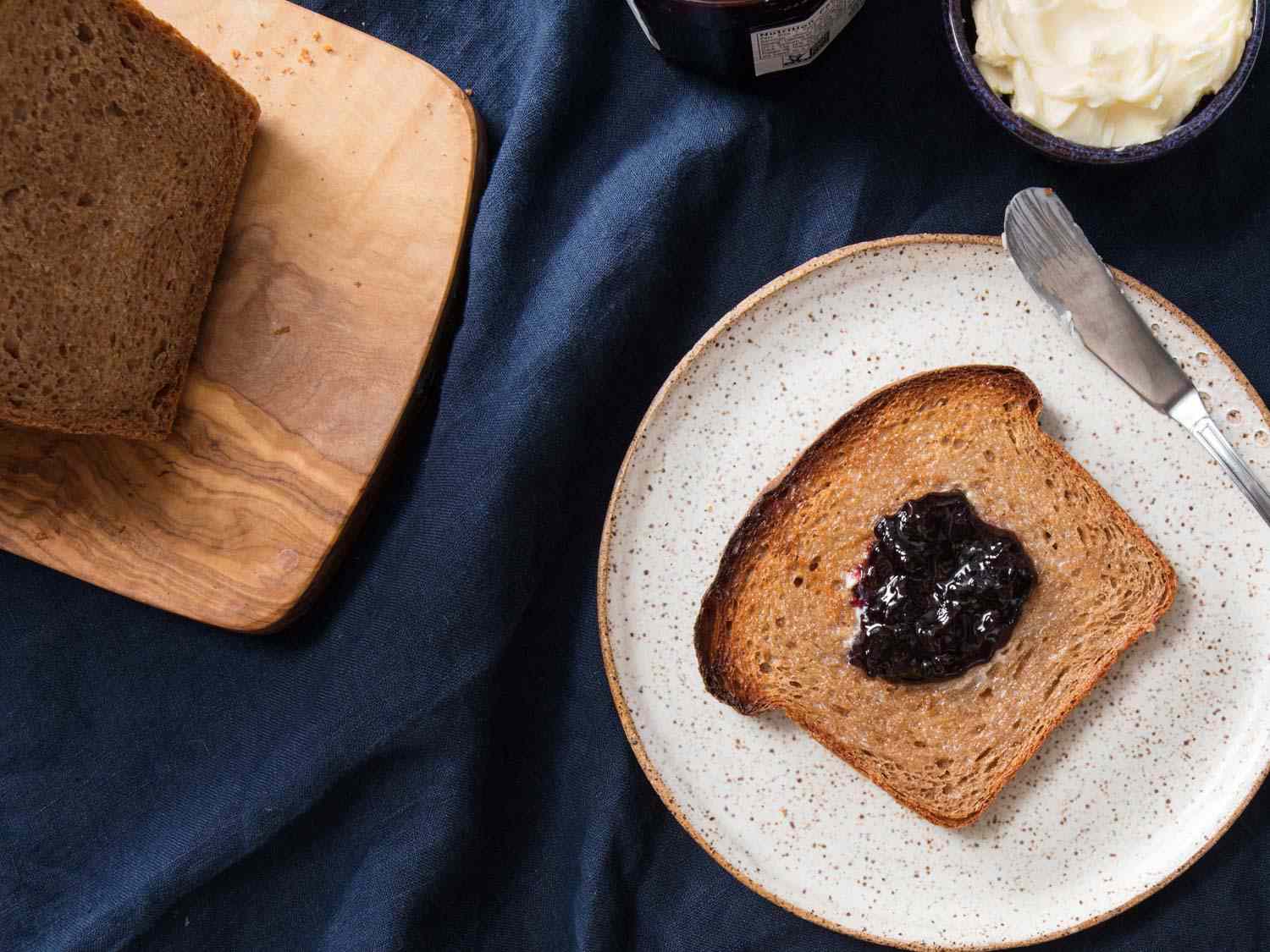
This recipe produces a wonderfully light and chewy 100% whole wheat loaf, utilising a food processor for efficient kneading. The process involves an initial autolyse to hydrate the flour, followed by mixing in a food processor to develop the gluten. After two proofing stages, the dough is baked into a golden loaf ideal for sandwiches. The method accounts for variations in kitchen temperature during the rising times. The finished bread keeps well at room temperature for up to a week.
Ingredients
- 15 ounces whole wheat flour, such as Bob's Red Mill (about 3 1/3 cups, spooned; 425g), plus more for dusting
- 11 1/4 ounces cool water, about 65°F/18°C (about 1 1/2 cups minus 4 1/2 teaspoons; 320g)
- 1 3/4 ounces dark or light brown sugar (about a shy 1/4 cup; 50g)
- 3/8 ounce (2 3/4 teaspoons; 11g) Diamond Crystal kosher salt; for table salt, use about half as much by volume or the same weight
- 1/4 ounces instant dry yeast, such as SAF (1 packet or 2 rounded teaspoons; 7g); not RapidRise or active dry (more info here )
- 2 ounces cool water, about 65°F/18°C (about 1/4 cup; 55g)
- 1 ounce neutral oil, such as safflower, or a nutty, flavorful oil, such as hazelnut or roasted pumpkin seed (about 2 heaping tablespoons; 28g)
Method
- For the autolyse, mix the whole wheat flour with the first portion of water in a large bowl. Stir until the water is fully absorbed, then knead briefly against the bowl's sides until no dry flour remains. Cover the bowl and leave the mixture to rest for 2 hours 30 minutes to hydrate.
- Place the hydrated dough into a 14-cup food processor fitted with the standard metal blade. Add the brown sugar, salt, and instant dry yeast. Process the mixture until the dough becomes silky and a small piece can be stretched thin without breaking, about 75 seconds. Note that timing and capacity may differ with smaller machines, potentially requiring processing in batches.
- Once the gluten is well developed, with the processor running, slowly pour in the remaining water and the oil. Continue processing just until the mixture is smooth. The dough will now be sticky, wet, and elastic.
- For the first rise, move the dough to a large, lightly greased bowl. Cover it and allow it to proof until it becomes puffy, light, and roughly doubles in size, about 2 hours at 70°F (21°C). A cooler kitchen will extend this time, while a warmer one will shorten it.
- To shape the loaf, turn the soft dough onto a clean surface lightly dusted with whole wheat flour. Pat it into a 7-inch square, then roll it into a tight log, sealing the seam with the heel of your hand. Place it seam side down into a lightly greased 1-pound loaf pan and cover loosely.
- Allow the dough to undergo its second proof until it is puffy, light, and rises about 2 1/2 inches above the pan's rim at the centre. Test readiness by gently poking with a floured finger. it should leave a shallow impression that springs back slowly after a minute. If it springs back immediately, continue proofing. This takes about 75 minutes at around 70°F (21°C), though timing varies. Near the end, position an oven rack in the lower-middle and preheat the oven to 350°F (180°C).
- After the second rise, uncover the dough and bake it until it is well risen, golden brown, and sounds hollow when tapped. about 45 minutes, or until it reaches an internal temperature of approximately 200°F (93°C). Turn the loaf out onto a wire rack immediately. Let it cool completely before slicing, at least 90 minutes. Use a sharp serrated knife to slice. Store the loaf at room temperature for up to a week.
Nutrition (per serving)
Sodium359000 mg
Recipe details
CategoryBreakfast
Cuisineamerican
AuthorStella Parks